Aviation Switching Module – NSN 4920-01-250-2696 (AS-IS / Untested): Military Aviation Electrical Module
Aviation Switching Module – NSN 4920-01-250-2696 (AS-IS / Untested): Military Aviation Electrical Module
Blog Article
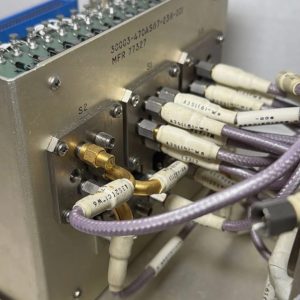
The Aviation Switching Module – NSN 4920-01-250-2696 (AS-IS / Untested) should be purchased with the understanding that no operational, calibration, serviceability, compatibility, or installation guarantee is being made.
An Aircraft Switching Module may interact with test equipment, aircraft systems, electrical circuits, or support hardware, while an Aerospace Switching Module should not be energized without suitable technical information.
The Aircraft Electrical Switching Module may route selected circuits, while the Aviation Electrical Control Module, Aircraft Power Switching Module, Aerospace Electrical Control Unit, and Aircraft Signal Switching Module terms should not be interpreted as confirmed functions without documentation.
The Aviation Control Module, Aircraft Switching Unit, Aerospace Power Distribution Module, Aircraft Electrical Control Unit, Aviation Power Control Module, Aircraft Electronic Switching System, Aerospace Switching Unit, and Aircraft Electrical Module keywords describe a broad aerospace-electrical product category.
Overview of the Aviation Switching Module
NSN 4920-01-250-2696 should be compared with the data plate, manufacturer number, contract markings, serial number, connector layout, and available documentation on the actual unit.
Complete identification increases the value of the Aviation Switching Module for restoration, research, inventory management, or component evaluation.
AS-IS Aerospace Equipment Considerations
AS-IS and untested means the module is offered without confirmation that it powers on, switches circuits, communicates with associated equipment, meets get more info specifications, or performs its original function.
Bench testing should begin only after technical documentation, circuit protection, connector identification, and safe power requirements are established.
Aircraft Switching Module Applications
A module used with maintenance equipment may function differently from one installed onboard an aircraft.
Missing knobs, guards, labels, connectors, covers, or fasteners may reduce completeness.
Inspecting Aerospace Electrical Hardware
Age, handling, impact, humidity, temperature changes, contamination, and long-term storage can affect both mechanical and electrical condition.
Connector damage can prevent proper mating or create electrical shorts even when the module enclosure remains intact.
Inspecting Aviation Module Wiring
A qualified technician should determine whether additional internal inspection is justified.
The module should not be modified simply to produce a temporary power-on result.
Aviation Electrical Control Module Functions
The exact interface must be established through diagrams, manuals, connector data, or verified system information.
Careful preservation supports future study and accurate Aviation Electrical Control Module documentation.
Choosing an Aircraft Power Switching Module
A switch that moves normally may still contain burned, corroded, welded, or high-resistance electrical contacts.
Any successful limited test should be documented precisely without changing the overall status beyond what was actually verified.
Aviation Control Unit Inspection
Troubleshooting requires a logical sequence based on technical information rather than random power application.
Undocumented modifications can make future troubleshooting and identification more difficult.
Aircraft Signal Switching Module Uses
The pinout and signal type should be confirmed before continuity or injection testing.
Missing or corroded bonding components may affect noise, interference, or reliability.
Aviation Control Module Applications
Associated wiring, power supplies, interfaces, switches, displays, sensors, test sets, or aircraft equipment may be required for meaningful operation.
Every marking should be recorded before purchase or installation planning.
Commercial Value of an Untested Switching Unit
Detailed condition reporting supports fair commercial evaluation.
Training use should avoid destructive modifications when the component has collectible or restoration value.
Choosing an Aerospace Power Distribution Module
Internal conductive components can corrode or loosen during storage.
Bent brackets, enlarged holes, missing fasteners, or distorted mounting surfaces may complicate restoration.
Maintaining Legacy Aviation Control Equipment
Documented condition improves confidence among buyers of legacy Aircraft Electrical Control Unit equipment.
Limited testing should not be described as complete serviceability verification.
Aviation Power Control Module Uses
An Aviation Power Control Module can have specialized applications within aircraft systems, aerospace ground equipment, maintenance platforms, or test installations.
Power-control components may retain electrical energy or contain circuits requiring special handling depending on internal design.
Maintaining Aerospace Switching Equipment
A systems approach supports more accurate troubleshooting and restoration.
A replacement AS-IS unit may provide useful comparative parts but should not be installed without evaluation.
Preserving Military Aviation Equipment
The unit should not be stacked beneath heavy equipment or left on conductive surfaces.
Original packaging should receive additional protection rather than being used as the only shipping container.
Buying AS-IS Aviation Electronics
A buyer seeking an operational replacement has different needs from a collector, technical school, parts dealer, or restoration specialist.
Remote buyers should request current photographs of the actual unit instead of relying on catalog images or pictures of similar equipment.
Evaluating an AS-IS Aircraft Switching Unit
The seller should disclose corrosion, missing parts, broken controls, damaged connectors, previous repairs, opened seals, burned areas, contamination, and signs of impact.
- Determine whether cables, plugs, manuals, test leads, mounting hardware, storage cases, or companion components are included.
- Check for burned odors, melted material, arcing marks, water entry, chemical residue, and internal loose components where visible.
- Retain purchase records, photographs, labels, research, testing notes, and repair documentation with the module.
Professional Bench Evaluation
Every connection should be documented before power is applied.
Test results should identify which circuits or functions were checked and which remain unknown.
Aircraft Electrical Module Repair Planning
Temporary substitutions should not become undocumented permanent repairs.
Accurate records support future maintenance and responsible resale.
Aviation Switching Module Conclusion
For the right purchaser, the unit can offer a useful foundation for technical research, controlled troubleshooting, component recovery, or legacy-equipment restoration.
Buyers should request detailed photographs, accurate AS-IS disclosures, technical research, secure transaction terms, protective shipping, and qualified evaluation where appropriate.
Whether the item is purchased for restoration, training, parts recovery, display, testing, inventory, or professional repair, transparent information and controlled handling provide the strongest foundation.
With prompt attention to switches, connectors, wiring, enclosure condition, corrosion, labels, and internal components, the module can preserve its technical and commercial potential.
Report this page